Sunday, August 16, 2015

We're never over overalls: A brief history of overalls.

Hello Paper Dolls!

We recently got some great overalls in at the shop including the coveted Landlubber bell bottom version. Here's a little history on the overall:

 Overalls evolved from thigh-high gaiters known as "spatterdashes" or "kneecaps"; side-buttoning canvas or leather gaiters that covered almost all of the shoe in addition to most of the leg, that came into use about 1650. With the availability of cheap cotton in the 1800's, cotton canvas, duck, and denim replaced the linen canvas used in the overalls of the 1700's. Many, many local tailors and bulk manufacturers produced overalls and jumpers for working men all across America. The next development in the history of overalls would be the invention of "Levis" by adding copper rivets to the stress points of cotton duck overalls.

Over time, their baggy silhouette served as an emblem worn by railroaders and Depression-era farmers — as recalled in Grant Wood’s American Gothic. Later, they became emblematic of 1960s’ hippies, college students of the ‘70s, and even hip-hop and other recording artists, who wore them with one shoulder unfastened.
Landlubber was a jeans and denim label, started in 1964 by the Hoffman Corporation of Boston. During the early 1970s, they were THE cool jeans to wear, both their bellbottom jeans and cute jean dresses and skirts. The label was briefly relaunched in the early 1990s. Landlubbers, which were originally distributed to Army-Navy retail stores in unisex sizes, have been redesigned. They are no longer as low-rise and as hip-hugging. They are also not as wide at the bottom or the knee; none of that ''elephant bell'' look that represented the last evolution of the bell bottom in the late 1970's. Some styles even have pleated fronts.
Since the 1960s, different colors and patterns of bib overalls have been increasingly worn by young people of both sexes, often with one of the straps worn loose or unfastened along the side and under the arm. The bib overalls fashion trend among American youth culture peaked in the latter half of the 1970s, and again for females in the late 1990s.
Come down to the shop and grab a pair for yourself!

Saturday, August 1, 2015

Charm Bracelets - We've always loved them (and I mean always)

Hello Paper Dolls,

Recently we've gotten some really neat charm bracelets in the shop and thought we'd make a blog post about the history of the once again popular accessory.

The wearing of charms may have begun as a form of amulet to ward off evil spirits or bad luck.

During the pre-historic period, jewelry charms would be made from shells, animal-bones and clay. Later charms were made out of gems, rocks, and wood.
For instance, there is evidence from Africa that shells were used for adornments around 75,000 years ago. In Germany intricately carved mammoth tusk charms have been found from around 30,000 years ago. In ancient Egypt charms were used for identification and as symbols of faith and luck. Charms also served to identify an individual to the gods in the afterlife.

During the Roman Empire, Christians would use tiny fish charms hidden in their clothing to identify themselves to other Christians. Jewish scholars of the same period would write tiny passages of Jewish law and put them in amulets round their necks to keep the law close to their heart at all times. Medieval knights wore charms for protection in battle. Charms also were worn in the Dark Ages to denote family origin and religious and political convictions.

Charm bracelets have been the subject of several waves of trends. The first charm bracelets were worn by Assyrians, Babylonians, Persians, and Hittites and began appearing from 600 – 400 BC.

For example, Queen Victoria wore charm bracelets that started a fashion among the European noble classes. She was instrumental to the popularity of charm bracelets, as she “loved to wear and give charm bracelets. When her beloved Prince Albert died, she even made “mourning” charms popular; lockets of hair from the deceased, miniature portraits of the deceased, charm bracelets carved in jet.”
In 1889, Tiffany and Co. introduced their first charm bracelet — a link bracelet with a single heart dangling from it, a bracelet which is an iconic symbol for Tiffany today.
Despite the Great Depression, during the 1920's and 1930's platinum and diamonds were introduced to charm bracelet manufacturing.
Soldiers returning home after World War II brought home trinkets made by craftsmen local to the area where they were fighting to give to loved ones. American teenagers in the 1950's and early 1960's collected charms to record the events in their lives. Screen icons like Elizabeth Taylor and Joan Crawford helped to fuel the interest and popularity of charm bracelets.

Although interest and production waned through the latter part of the 20th century, there was a resurgence of popularity after 2000 and collectors eagerly sought out vintage charms.

As the year 2001 opened, the fashion industry once again discovered the lure of the charm bracelet, flooding the market with new charm styles in all price ranges. Fashion giants like Louis Vuitton have brought the glamour back to charm bracelets, declaring them the must-have accessory for any occasion. And if the past is any indication, charm bracelets will be in style for quite sometime.

So come down to Paper Doll Vintage Boutique and check out our charm bracelets!


Sources:
https://en.wikipedia.org/wiki/Charm_bracelet#History
http://www.mymotherscharms.com/history.htm


Saturday, July 18, 2015

Flower Power at Paper Doll Vintage!


hb_1988.296Hello Paper Dolls!

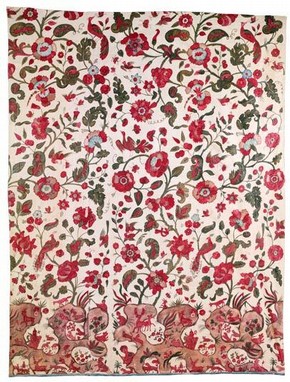
In honor of our new floral themed window displays we decided to do a post on the history of the floral print. Throughout history flowers held deep meaning and symbolism which people wanted to incorporate into their clothing.

Floral prints first made their appearance in 12th century East Central Asia with a square panel embroidered with silk thread showing flowers, birds and animals.

220px-Artichoke_wallpaper_Morris_and_Co_J_H_Dearle_no_bordersIn China, flowers were woven into stunning, brightly colored brocades or created in detailed embroideries. Symbolic imagery featured heavily in Chinese textiles, the aesthetic being bold and bright.

In Japan, the chrysanthemum featured heavily in textile motifs, particularly in kimono fabrics. It’s naturally long, slender petals radiated similarly to the sun’s rays, and so the flower became synonymous with the sun, as well as a symbol of the royal family.
India is also home to a rich history of not only textiles, but also ornate and dazzling floral designs. With this in mind, it is unsurprising that European traders were eager to bring these rich and beautiful pieces back with them.

During industrial revolution, when machine printed chintz could be produced en mass and in the early 20th century, off the rack floral print dresses became hugely popular.

At the start of the Victorian era, the art of floral designs on fabrics had become a sign of elegance and distinction. As the Aesthetic, Arts & Crafts, Anglo-Japanese and Art-Nouveau movements took their place in modern design, floral patterns followed. From detailed woven tapestries to finely hand-painted wall papers, floral motifs had claimed a purpose in all forms of design.

By the 1400’s and 1500’s, floral's began to spread globally as European traders started purchasing the extremely ornate and detailed fabrics. These textiles would fetch very high prices, and subsequently, were considered a status symbol in Europe.

Come down to the shop and see our new floral windows as well as retro reproduction and vintage fashions in a floral print for both men and women! Or find some great floral dresses in our Etsy store!

Sources:
http://startupfashion.com/fashion-archives-floral-fabrics
https://islandwindowcoverings.wordpress.com/2013/06/15/flower-power-a-brief-history-of-inspiring-fabrics


Monday, June 8, 2015

Summer is coming! The history of swimwear: Turn of the century until today...


Hello Paper Dolls!


Swimsuit season is around the corner so we thought we'd post a short history of the bathing suit. Paper Doll Vintage carries several retro reproduction syles and authentic vintage suits at the shop so come down and try some  on after you read this fashion history!


It was not until the mid 1800's that swimming at the seaside was considered to be a form of relaxation and enjoyment. Victorian costumes were the ultimate in cover up, at least while they were dry. Once wet, the woolen fabric clung to the body removing the need for a vivid imagination. The weight of the sodden wool also turned swimming into a bit of a challenge.


Mixed bathing became acceptable at the turn of the 19th and 20th centuries. Edwardian ladies even took to walking openly along the beach while in their costumes.

In 1921 Jantzen Knitting Mills launched the first one-piece ‘elastic’ suit that immediately gained popularity with the Bathing Beauty Pageant that was held in Atlantic City.

For the next 15 years, wool knit swimming suits were worn by both men and women.

Knitted wool swimsuits were eased into history in the mid 1930's when California swimsuit maker Mabs of Hollywood began to fashion swimwear from Lastex, a woven satin finish elastic and silk material first used for girdle manufacture.

In 1946, designer Louis Reard was obliged to hire Micheline Bernardini (an exotic dancer at the Casino de Paris) to model his latest creation – the ‘Bikini’ – because his regular models flatly refused to wear it.
The introduction of Reard’s bikini (named after Bikini Atoll in the South Pacific where atomic bomb testing had taken place) caused quite a stir in the United States.

Popular in the 1950's were one-piece costumes constructed like that of a foundation undergarment in a variety of styles, although these gradually gave way to the two-piece body baring styles.

By 1956 the bikini was finally accepted and became popular
 largely due to Bridget Bardot who was frequently photographed strolling the French Riviera wearing hers!

American and UK teens went wild in the 1960's, scampering 
everywhere to find the ‘Itsy Bitsy Teenie Weenie Yellow Polka Dot Bikini’ made famous by Brian Hyland who rose to the top of the music charts with a song of the same name!

Gernreich continued with his body baring designs by introducing his thong bathing suit in 1974. This was followed by Rio and St. Tropez, introducing the ‘Tanga’ suit, or Brazilian Thong, which required not only the dental flossing of ones buttocks but a derriere without a trace of cellulite and nerves of steel!

Another innovation in swimwear in the 1970's was the tan-through swimsuit but as the issue of skin protection from the sun emerged, their popularity was a short-lived novelty.

Enter the age of the V-kini. Those leg lines don’t lie, people. The heightened leg line is an easy way to identify just about any 1980's bathing suit. This feature was added to both bikinis and one pieces in all their variations. 

Bikinis are becoming all that more customization with strings on both tops and bottoms while one pieces are becoming more unique. Plunge one pieces were super sexy.

Meanwhile in America, Baywatch was making a huge impact on swimsuits. The high leg lines and V-kinis remained for the beginning part of the decade. Athletic influences also began to take hold thanks to famous athletes/models like Gabrielle Reese. I personally think Sporty Spice had a lot to do with it too.

Oh! And speaking of athletic influences – does anybody remember the tankini? Those were introduced in the late 1990's. They were essentially a two piece suit comprised of bikini bottoms and a water friendly tank top. I loved wearing the tankini as a kid because I thought it made me look like a surfer.

Sources:

http://hellogiggles.com/have-times-changed-for-the-better-a-look-back-at-womens-swimwear/

http://vintagefashionguild.org/fashion-history/swim-wear-history/


Currently we carry three Hell Bunny Styles in sizes XS-XL plus authentic vintage suits!


Saturday, April 18, 2015

The History of Nautical Fashion!

Hello Paper Dolls!

Our next art show will be nautically themed and so we wanted to do a little homage to the history of nautical fashion.

In 1846 Queen Victoria started the trend by dressing her son in a sailor suit for a portrait being pained of him. By 1871 the trend had made it to women's fashion and stuck around until today. Worn initially as "yachting costumes" the trend caught on quick.


At the turn of the century swimming was becoming a more popularized act of leisure. Designers turned to the nautical to gain inspiration for the modest swim garments.  In 1915 the Sears catalog called the sailor dress "stylish."


The Middy Blouse that gained great popularity in the 1920's was influenced by the nautical styling of the previous decade. Patriotism during the first World War also pushed fashion towards a more patriotic styling and used red white and blue fabrics. 


By the 1930's the fashion favorite sailor pant made it's way onto the scene. A high waist with buttons emulated the pants of the Navy. This look was popularized by many actresses of the time. 

When WWII was stirring up patriotism once again the papers said to, "Give a fashionable salute to the Navy in a sailor dress." At this time the nautical themed moved from just clothing to accessories and shoes. 

The 1950's is where nautical fashion really got it's signature look and has been a part of fashion ever since! Moving with the return of the middy and through the mod movement it is a classic look for summer and continues to be to this day. 

Tendances mode printemps-été 2015 uniforme-marinLanvin, Chloe and Marc Jacobs all have nautical trends for Spring / Summer 2015!


Paper Doll Vintage has many nautical inspired retro style dresses in stock as well as accessories.  Keep an eye out for swimsuits coming in for summer in the near future and follow us on Facebook and Instagram for updates!


We look forward to seeing you at the shop!


- Paper Doll Vintage


Sunday, February 22, 2015

Rip off the Runway! Jason Wu Fall 2015 Ready to Wear.

Hello Paper Dolls!

It's that time again... and in honor of New York Fashion Week ending we decided to put together a look inspired by Jason Wu's Fall 2015 Ready to Wear Collection with items we have here at the shop.   He used military greens in more masculine cuts paired with fur, belts and booties to create a sleek timeless look.  Elegant sportswear with simple silhouettes really make this show special because it's a great look for every age and body type.  
"When Jason Wu was first starting out, fashion watchers liked to compare him to an upstart Oscar de la Renta." - Style.com

Appropriately we paired a vintage Oscar de la Renta Silk Sheath Dress with Mother of Pearl Buttons (Size Large, $68.00) with BCBG Italian Black Booties from the 1990's (Size 7, $39.00).  To complete the inspired look we used a long stole (inquiries only please) and belted it with a gold Metal Scale Stretch belt from the 1970's (One Size, $14.00).

Fun Fact: Wu designed Michelle Obama's dresses for the Presidents first and second inaugurations.  

Check out the whole collection on Style.com: http://www.style.com/fashion-shows/fall-2015-ready-to-wear/jason-wu/collection

If you like anything else stop in or give us a call so we can help you Rip off the Runway!


Friday, February 13, 2015

Valentine's Day = Skulls and Roses? Yes... yes it does.

Hello Paper Dolls!

Valentine's Day is tomorrow and of course we are thrilled to see all the LOVE around.  I did a little research and found that you can go see the skull of St. Valentine in the Basilica of Santa Maria in Cosmedin in Rome.


The story goes.... Saint Valentine was persecuted as a Christian and interrogated by Roman Emperor Claudius II in person. Claudius was impressed by Valentine and had a discussion with him, attempting to get him to convert to Roman paganism in order to save his life. Valentine refused and tried to convert Claudius to Christianity instead. Because of this, he was executed. Before his execution, he is reported to have performed a miracle by healing Julia, the blind daughter of his jailer Asterius. On the evening before Valentine was to be executed, he would have written the first "valentine" card himself, addressed to the daughter of his jailer Asterius, who was no longer blind, signing as "Your Valentine."

It took Chaucer to bring Valentine's Day into it's current romantic form.  


 For this was on seynt Volantynys day

Whan euery bryd comyth there to chese his make.
["For this was on St. Valentine's Day, when every bird cometh there to choose his mate."]
This poem was written to honor the first anniversary of the engagement of King Richard II of England to Anne of Bohemia.A treaty providing for a marriage was signed on May 2, 1381. (When they were married eight months later, they were each only 15 years old).

Nowadays, no matter how commercial it gets Valentine's Day is a good time to remind the people you love you love them.  Love is all you need!

For all your last minute V-DAY gift needs stop down at Paper Doll Vintage and take advantage of our 20% Sale on Red, Pink and Heart items in the shop.  We gift wrap too - so come get something for your Valentine.  Skulls, flowers, birds, hearts  -  We've got it all!  Happy Love Day!!!